



Across the country, communities are confronting a new era of drinking water challenges. Emerging contaminants, evolving regulations, and growing populations are reshaping how cities think about water infrastructure. The question is no longer whether systems meet today’s standards, but whether they are designed to adapt to the standards of tomorrow. In Woodbury, Minnesota, that future-focused mindset is guiding one of the most ambitious per- and polyfluoroalkyl substances (PFAS) treatment projects in the nation.
Located in the southeast Minneapolis/St. Paul (Twin Cities) metro, Woodbury is home to approximately 80,000 residents and continues to experience growth. Like many communities in the eastern Twin Cities region, the groundwater supply serving as the water source for the City of Woodbury has been impacted by PFAS contamination traced to historic disposal practices. As health-based guidance and regulatory thresholds issued by the State of Minnesota tightened, the City faced increasing constraints on its drinking water supply. Temporary treatment measures addressed immediate needs while highlighting the importance of a long-term solution that could restore full capacity based on the Federal PFAS Rule proposed by the U.S. Environmental Protection Agency.
Key Takeaways
1. Woodbury is building a long term solution to PFAS challenges
The City is moving beyond temporary fixes with a permanent treatment facility designed to treat all groundwater and restore full system capacity.
2. The project is designed at a large scale for their growing community
When complete, the facility will treat up to 32 million gallons per day, supported by new pipelines, expanded storage, and a fully integrated water system connecting wells, treatment, and distribution.
3. Flexibility is built in to meet future regulations and growth
Using proven technologies like GAC and ion exchange, the plant is designed to adapt over time, allowing for future expansion and evolving water quality standards while continuing to serve a growing community.
That long-term solution is taking shape in the form of a permanent water treatment plant designed to treat all of Woodbury’s groundwater supply for PFAS. AE2S worked alongside the City and project partners to help translate long-range water quality goals into practical design frameworks, ensuring that treatment, storage, and distribution elements function as a coordinated system rather than isolated areas of improvement.
“Our goal is to address PFAS contamination now and into the future, and provide the highest quality water possible,” said Jim Westerman, Woodbury Assistant Public Works Director. “This is the largest public infrastructure project in Woodbury history, and it will benefit the community for decades to come.”
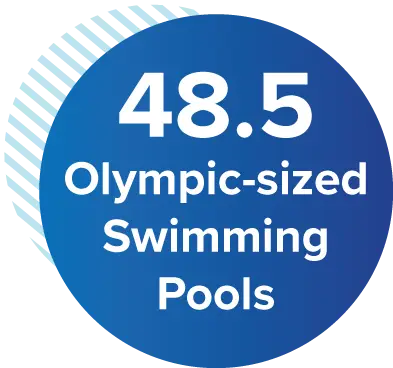
When operational, the facility will be capable of treating up to 32 million gallons of water per day (MGD), the equivalent of nearly 48.5 Olympic-sized swimming pools. All water from the City’s three well fields, 20 wells in total, will be routed to the facility for treatment, positioning it as one of the largest PFAS treatment systems in the country.
At the core of the treatment process is granular activated carbon (GAC) with the flexibility to utilize ion exchange (IX), both proven technologies for removing PFAS from drinking water. A yearlong pilot study, along with performance data from Woodbury’s existing temporary treatment systems, confirmed that GAC and IX can effectively reduce PFAS concentrations to meet current regulatory standards. Translating that proven performance from pilot and temporary facilities into a full-scale, permanent system requires careful engineering design and coordination. Vessel sizing, hydraulic profiles, media changeout strategies, and operational considerations all influence how effectively the treatment process can perform at the scale required for a growing community.
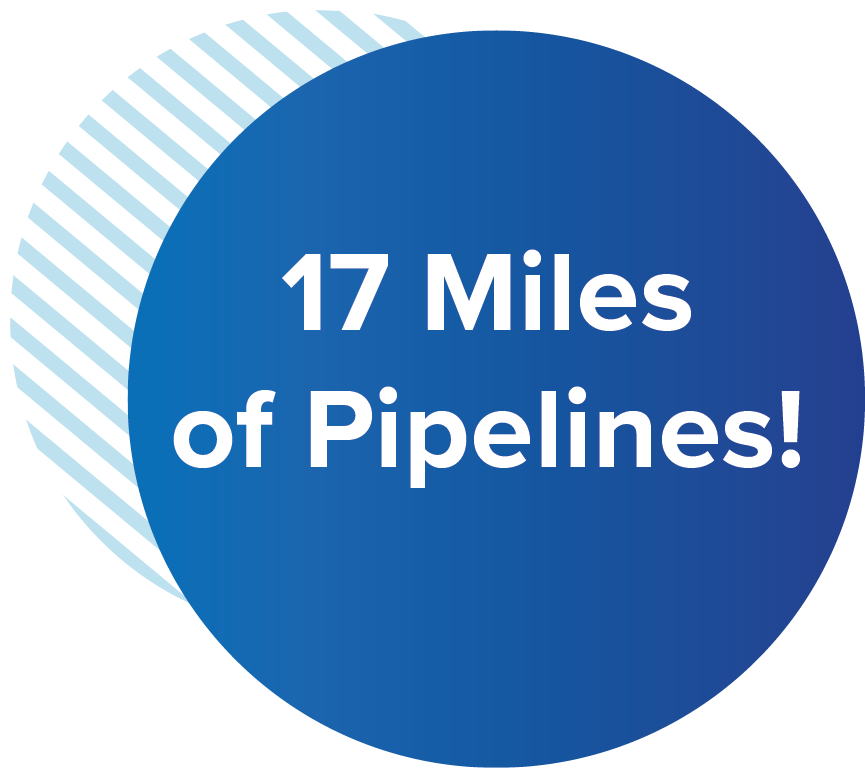
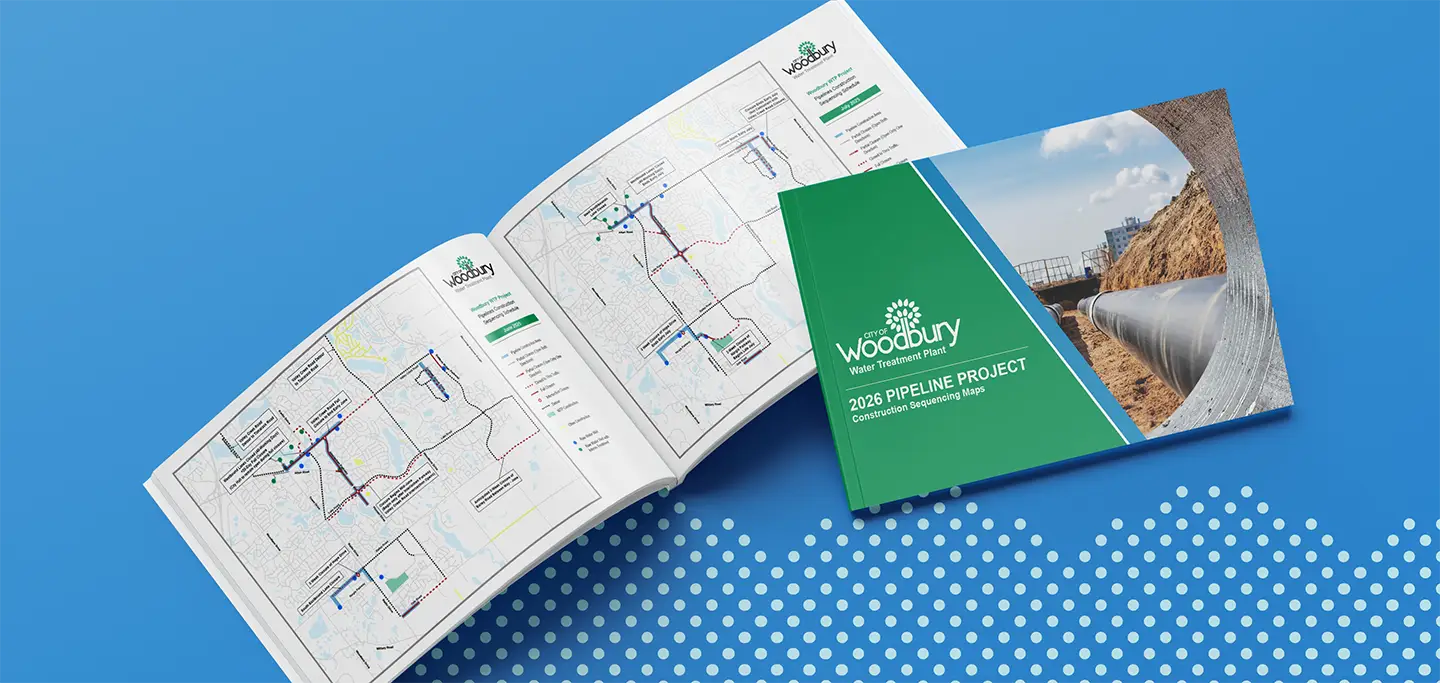
The project extends beyond treatment alone. To support reliability and peak demand, the water treatment plant site includes approximately 4 million gallons of underground onsite storage, complementing the City’s existing water tower (elevated) storage distributed across the community. This integrated storage strategy provides operational flexibility, helping the system meet daily demand swings and high-use periods without compromising treatment performance. More than 17 miles of new raw water and distribution pipelines will connect the well fields to the facility and return treated water to the system, forming the backbone of a reimagined, water delivery network from a centralized treatment location.
From a design perspective, one important consideration is ensuring the facility can adapt over time. The Woodbury water treatment plant is being designed to meet current PFAS standards while also supporting the community’s long-term needs. The overall space, layout, and process design aim to provide flexibility for future enhancements, including the possibility of expanding capacity or incorporating additional treatment technologies as regulations change and new water quality challenges emerge.
Designing for this level of flexibility requires more than technical modeling. AE2S’s role extends beyond process design to helping align treatment performance, facility layout, operational needs, and long-term expansion planning with the realities of serving a growing community. “Our approach combines proven treatment technologies with flexible design strategies, ensuring the entire system can adapt to future regulatory changes and community growth,” said Aaron Vollmer, PE, AE2S Client Development Director and Woodbury Project Manager.
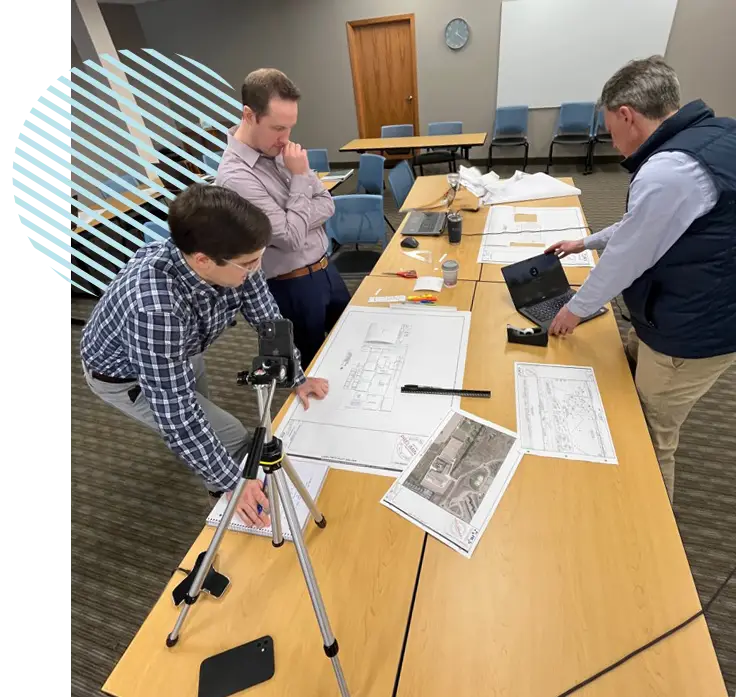
Delivering a project of this scale requires close coordination between the City, engineers, and technical partners. Process, structural, architectural, and operational elements must work together to ensure that the facility functions as a cohesive system.
Construction phasing and pipeline routing are designed to minimize impacts on neighborhoods and daily life, reflecting that infrastructure exists within communities, not apart from them.
Woodbury’s investment in a future-ready water treatment system represents more than a response to PFAS. It reflects a broader commitment to building infrastructure that is resilient and adaptable as science, standards, and community needs evolve. For AE2S, projects like this for the City of Woodbury underscore the importance of pairing sound research with flexible, community-centered design, helping communities build water systems that are prepared not just for today’s challenges, but with the foresight for whatever comes next.
“The City of Woodbury has taken a significant step toward ensuring safe, reliable drinking water for its community. It has been incredibly rewarding to partner with the City over the past eight years to develop this solution and to play a role in delivering a project that will serve and benefit generations to come.”
– Aaron Vollmer
STAY
UP TO DATE